
What Is Laser Wheel Alignment? (NP Pro Hubstand Explained)
Most people think a wheel alignment just means “make the car drive straight.” In reality, alignment controls how your tires touch the road, how your steering feels, and how stable your car is at speed.
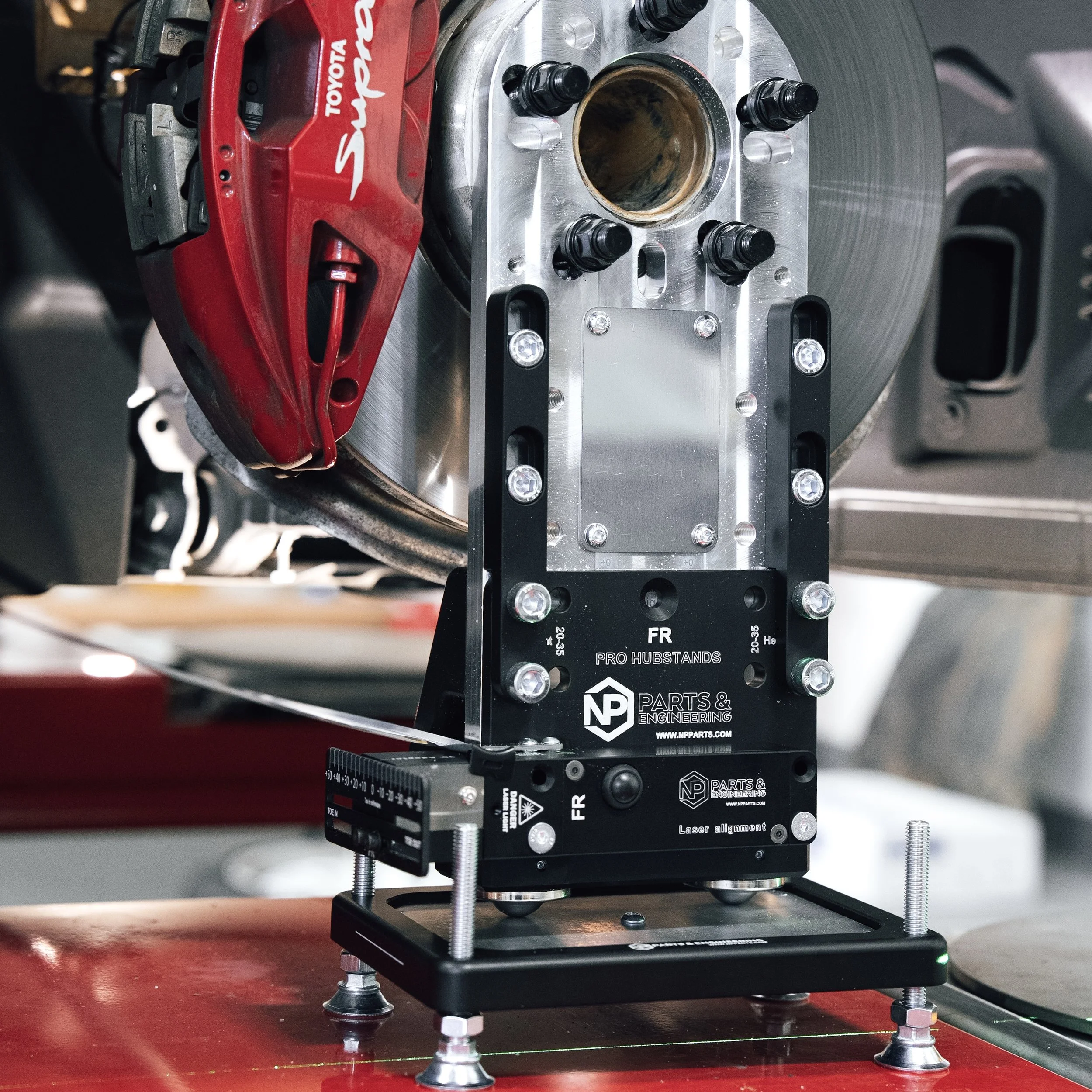
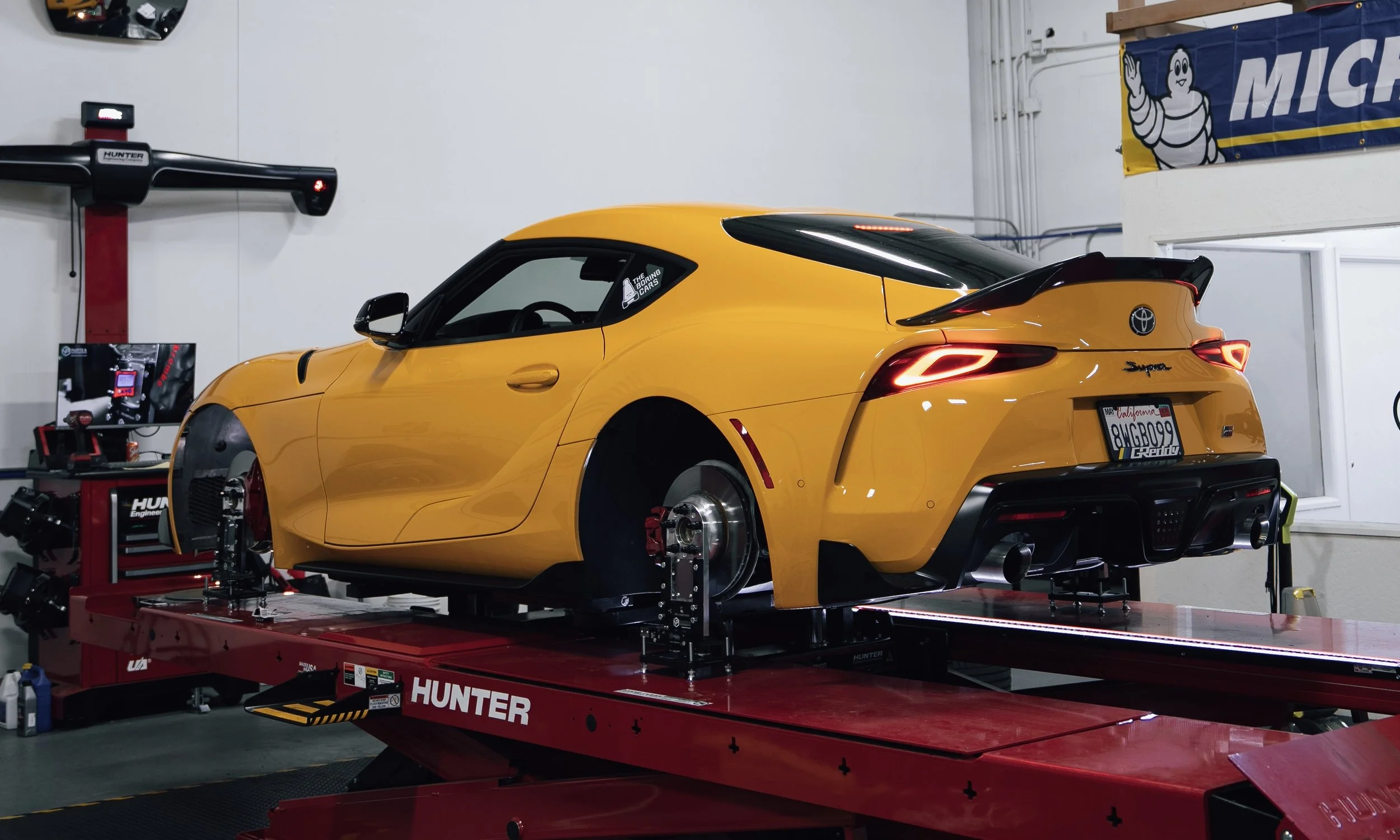
At Midnite Auto, we use laser wheel alignment with the NP Pro Hubstand system to measure these angles with higher consistency and accuracy than traditional wheel-clamp methods.
Instead of attaching to the wheel or tire, the Hubstand mounts directly to the wheel hub and uses lasers to read suspension geometry.
That difference matters.
Traditional alignment machines can be affected by:
Slightly bent wheels
Uneven tire wear
Tire sidewall flex
Large off-road or low-profile tires
By measuring from the hub — the true center of the suspension — those variables are removed from the equation.
This gives a clearer picture of:
Camber (wheel tilt)
Caster (steering angle)
Toe (wheel direction)
This approach is especially useful for vehicles with coilovers, lowering springs, lift kits, wide wheels, or aftermarket suspension components. It’s also commonly used for track-focused setups where small alignment changes make a noticeable difference.
Even stock daily drivers can benefit from the consistency, especially when tire wear or steering feel is a concern.
In simple terms: hub-mounted laser alignment doesn’t change what alignment is — it changes how accurately it’s measured.
Quick Q&A
Is laser alignment better than normal alignment?
It can be more precise because it avoids wheel and tire-related measurement errors and reads directly from the hub.
Do daily drivers need this?
Not necessarily, but many customers choose it for improved consistency and tire wear control.
Is it only for modified or performance cars?
No. While it’s popular for modified and track cars, it works on any vehicle.
Will it fix pulling or uneven tire wear?
If alignment is the cause, yes. Worn suspension parts should be repaired first.
Does it take longer than a standard alignment?
Yes. Hub-mounted laser alignment requires additional setup time because the equipment must be mounted to the hubs and calibrated. That extra time is what allows for more accurate and repeatable measurements.
