
Coilover Preload vs Ride Height: They’re Not the Same Adjustment
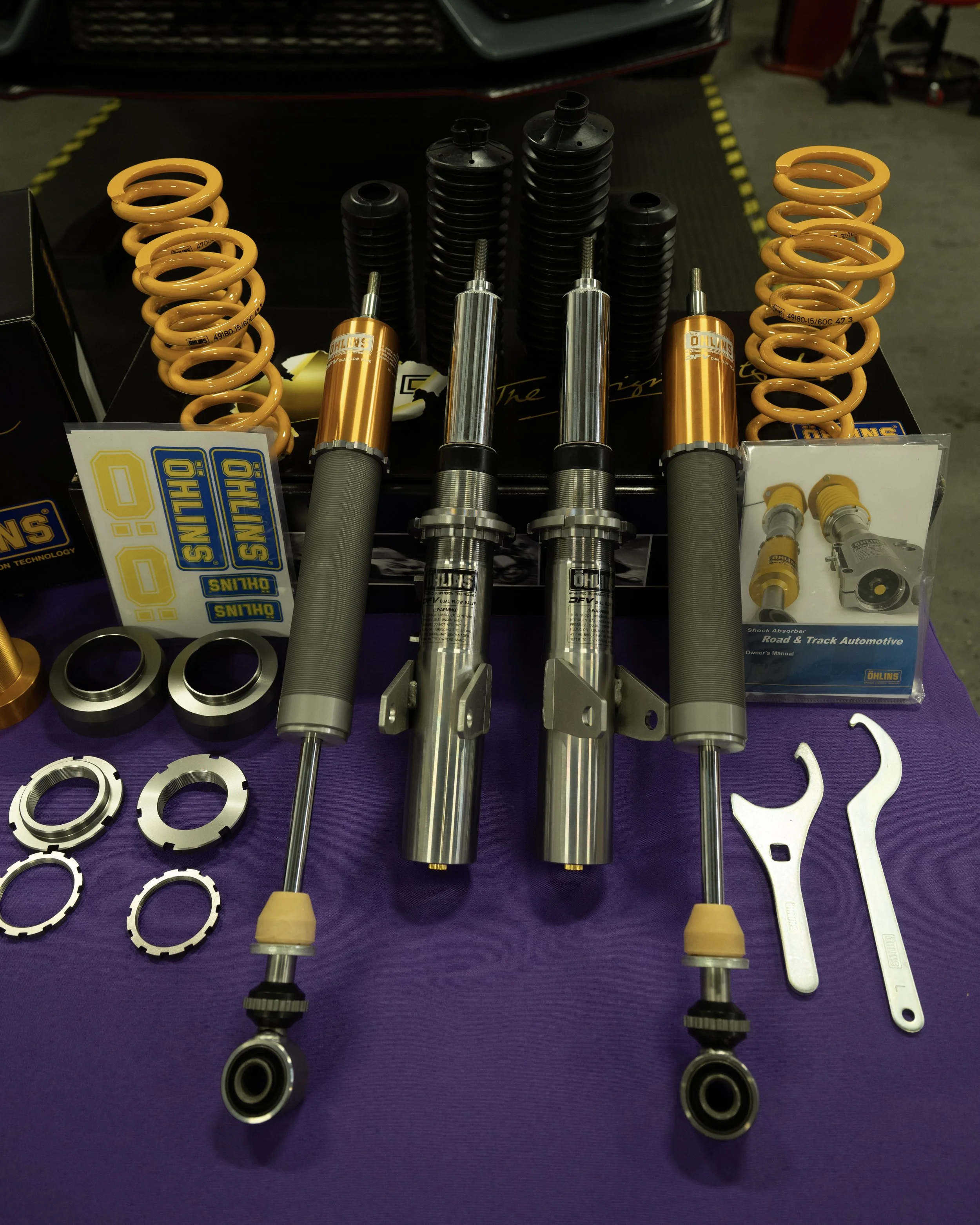
One mistake we see with coilover installation is using spring preload to set the vehicle’s ride height.
On many full-length adjustable coilovers, these are two different adjustments.
Spring preload controls how much the spring is compressed at full extension.
Ride height is typically adjusted through the lower shock mount, when the coilover design allows it.
Why does this matter?
Cranking excessive preload into the spring just to raise the car can change available droop travel and how the suspension behaves. On the other hand, lowering certain coilovers incorrectly can reduce bump travel and leave the car constantly riding near the bump stops.
A proper coilover setup should consider:
• Manufacturer-specified spring preload
• Bump and droop travel
• Left-to-right ride height
• End-link and sway bar preload
• Tire clearance at full steering lock
• Final suspension torque
• Wheel alignment after height adjustment
And no—“two fingers of wheel gap” isn’t suspension setup.
Whether it’s KW, Öhlins, BC Racing, TEIN, Bilstein, or another performance suspension, the goal is to get the ride height you want without compromising how the coilover was designed to operate.
📍 Midnite Auto – Sacramento
Coilover Installation • Lowering Suspension • Performance Alignment • Suspension Setup • Corner Balance
